Tiếng Việt
 English
 日本語
Business Intelligence (BI) Overview
1. What is Business Intelligence?
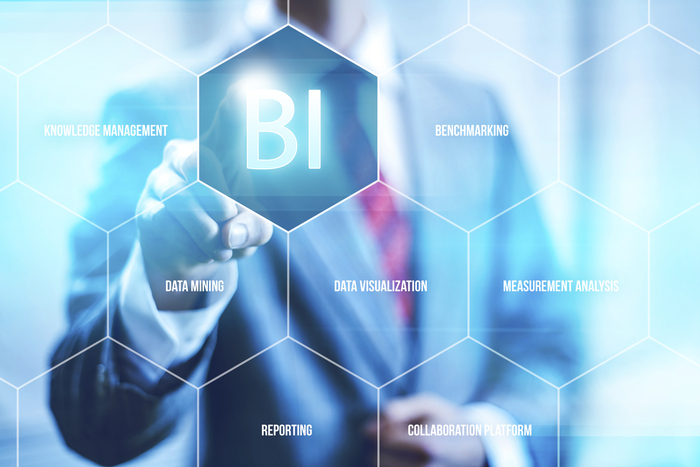
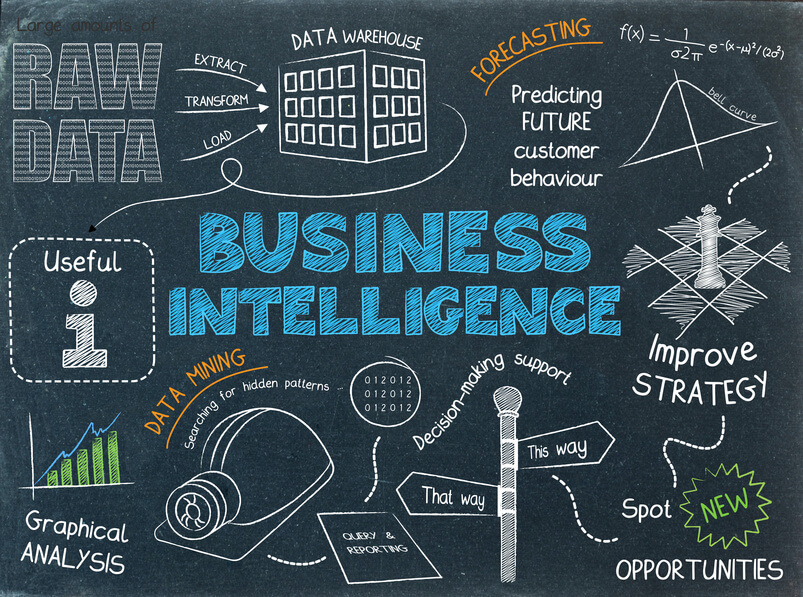
Business intelligence (BI) is a term used to refer to the technologies, applications and practices for the collection, integration, analysis, and presentation of business information. BI is a support tool to help businesses access important business information, analyze and make quick decisions. BI gathers and processes all kinds of raw data in the enterprise into charts, vivid images, easy to understand, easy to interact with, giving leaders and managers a view from the whole on the big picture of the business, providing detailed information of all business areas in the business.
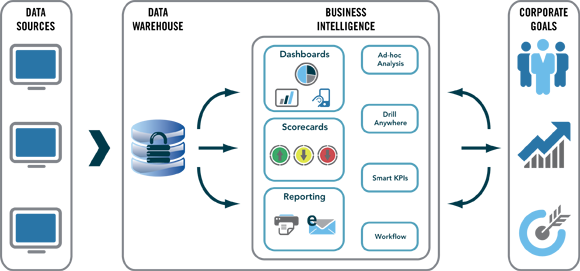
BI encompasses a wide range of tools, applications, and methods that enable organizations to gather information from internal systems and external sources; prepare for analysis; develop and run queries against data; Create reports, dashboards, and data visualizations to provide analytics to users and decision makers.
2. What is the system of Business intelligence (BI)?
The core problem in the BI system is data warehouse (Data Warehouse) and data mining (Data Mining) because the data used in BI is aggregate data (multiple sources, multiple formats, distributed and scheduled) history) that is characteristic of data warehouses. At the same time, the data analysis in Business intelligence is not simple analysis (Query, Filtering) but techniques in data mining (Data Mining) used to classify (Classification) clustering (Clustering), or prediction. So BI has a very close relationship with Data Warehouse and Data Mining.
BI system can be seen as a combination of 3 main components as follows:
- Data Warehouse: Contains aggregated data of businesses.
- Data Mining: Techniques used to mine data such as classification (Classification), clustering (Clustering), association (Association Rule), prediction (Prediction),...
- Business Analyst: Strategic decisions for business activities of enterprises.
3. What are the main components of BI?
Data Sources
- Is a raw database (usually a relational database) that comes from various sources such as business applications such as Human Resource Management (HRM), Customer Relationship Management (CRM), point of sale software, commercial websites. electronic…
- Can be any database management system such as MySQL, Oracle, MSSQL, DB2, ...
- Usually designed according to the relational database model but can also be big data, non-relational data (such as social networks, NoSQL).
Data Warehouse
- Is a database designed in a different model from normal OLTP databases (Online Transaction Processings - OLTP is a database design for frequent reading and writing, the amount of data for each read and write is small) and a place to store data. long-term data of the organization.
- DWH's data can only be read, not used for writing or updating by normal applications, it is only updated/written by the ETL (Extract Transform Load) tool, which converts data from Data Sources into Data Warehouse.
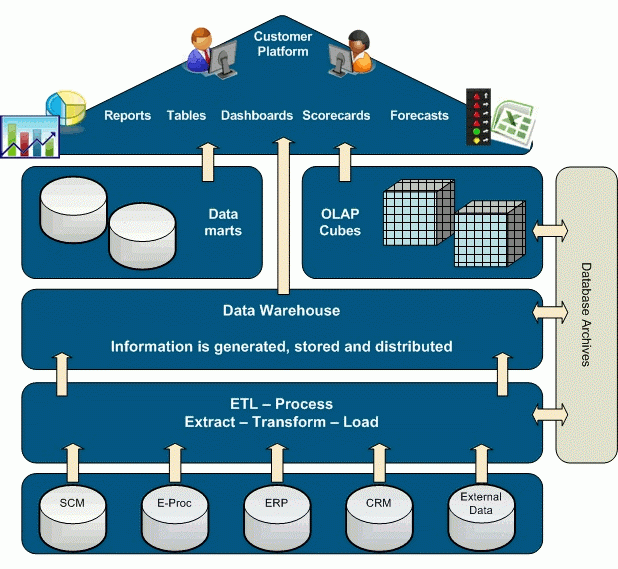
Integrating Server
- Responsible for intermediaries operating ETL tools to transform data from Data Sources into Data Warehouse.
Analysis Server
- Responsible for implementing cubes designed based on data dimensions and business knowledge.
- Cube is responsible for receiving input from DWH and executing predefined business to return results.
Reporting Server
- Execute reports with output received from Analysis Server.
- Where administrators centralize web-based reports, these reports can be attached to a web application, or an application.
Data Mining
- Is the process of extracting processed data information (in accordance with the specific requirements of the business) from the Data Warehouse and then combining it with algorithms to make (or predict) decisions that are beneficial to the business. business of the enterprise.
- This is an important process in BI, usually a business that wants to use a BI solution often comes with Data Mining.
Data Presentation
- Generate reports and charts from the data mining process to serve the needs of end users.
4. What are the benefits of BI?
The potential benefits of BI include accelerating and improving decision making, optimizing business processes, improving operational efficiency, driving new revenue, and gaining a competitive edge in business. business than competitors. BI systems can help businesses identify market trends and point out business problems that need attention.
Some of the practical benefits that businesses can easily see through the application of BI include:
- Helping businesses use information effectively and accurately to adapt to the constantly changing environment and fierce competition in business.
- Maximum support for administrators in making quick, timely and effective business decisions.
- Determine the position and competitiveness of the business.
- Analyze customer behavior.
- Define marketing goals and strategies.
- Predict the future of the business.
- Build business strategy.
- Retain old customers and anticipate potential customers.
- Meet the reporting needs of the departments.
- Provides an overview of the entire business.
- Maximum support for the operation, saving time and costs for administration.
- Contribute to changing operating skills, serving customers better.
- Create competitive advantages, increase opportunities to find and seize business opportunities.
- Assist internal users in evaluating, improving, and optimizing the organization's capabilities and operational processes.
5. Technologies that support Business Intelligence (BI)?
- Data warehousing
- Decision support systems
- Data mining and analytics tools
- Enterprise resource planning (ERP) systems
- Query and report writing technologies
- Customer relationship management
6. Who is Business Intelligence (BI) for?
Some of the following audiences are the ones who get the most benefit from BI including:
- Executives
- Business Decision Makers
- Analysts
- Customers
7. What factors influence the success of a BI project?
To successfully implement a BI project, one of the prerequisites is that the project team must understand the business and output products for the project. The development team must have knowledge and experience in data design and organization methods for Data Warehouse. Besides, the development team also needs to understand the tools of BI to be able to design and build the system quickly, easily, and efficiently.
8. How to find a reputable BI consulting and implementation service provider?
Our company, TA VI CO, is always proud to have a team of experienced technical experts with in-depth BI knowledge background and constant creativity that will be the place to provide BI consulting and implementation services to customers. your business in the most efficient way.
Some note:
- ERP applications should be combined with BI for the best use value.
- BI supports most businesses of all sizes and sectors.
- The integration with other systems in the use process of the enterprise should be carefully considered.
Hopefully the content of the above article can bring you a lot of useful information about Business Intelligence.
(The article is compiled from many sources)
Other news



One of the essential tools that help businesses achieve this is ERP (Enterprise Resource Planning) – a comprehensive enterprise resource planning system.

Discover 5 breakthrough technologies shaping the future of business operations – from artificial intelligence and intelligent automation to cloud-native platforms, cybersecurity, and real-time data analytics. Tavico’s comprehensive technology solutions empower businesses to accelerate...

In Vietnam, leading enterprises are no longer questioning whether to adopt AI, but are instead focusing on how to leverage it as a long-term strategic advantage



There are many front-end framework options available today. This makes the process of website construction easier. Some frameworks are more popular than others. React is one such framework that has gained popularity among development organizations. React js is a good choice for...

Despite the disruptions caused by the pandemic, 2021 will see the growth of the financial technology (Fintech) industry. According to CB Insights' State of Fintech report, the third quarter of 2021 recorded an increase of 147%, a record increase of the Fintech industry compared to...

What is Agile? What is the history and principles of Agile? Agile is a software development process right? This article will answer all your questions and explain Agile's core values so you can get it right.

AI is a term used in the field of technology and it has become all too familiar to humans. So how to build AI may not be understood by many people.

Although the economy is being affected by the COVID-19 pandemic, according to experts, the heat from the demand for ERP applications is still very large, especially from real estate businesses.



 ERP – The Key to Optimizing Business Processes from Tavico